

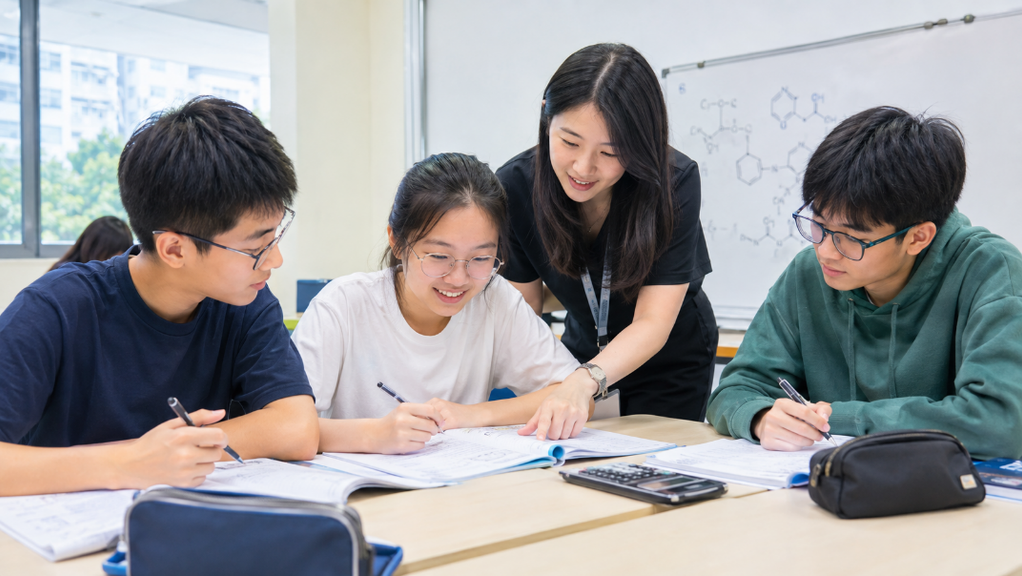
Choosing the right A level chemistry tuition can make a meaningful difference to a student’s understanding, confidence and examination preparation. In Singapore, where Junior College students face demanding academic expectations, quality A level chemistry tuition Singapore programmes can provide structured guidance, targeted practice and expert explanations to help students master challenging Chemistry concepts. Whether your child is struggling with H2 Chemistry, aiming to improve examination grades or preparing for the GCE A-Level examinations, the right support can help turn difficult topics into manageable learning goals.
Chemistry at the Junior College level requires much more than memorising equations and reaction conditions. Students must understand scientific principles, apply concepts to unfamiliar situations, interpret experimental data and communicate answers accurately. Therefore, effective Chemistry tuition should develop both conceptual understanding and examination skills.
SmartLab Tuition Centre has been providing tuition since 1999, supporting students through different stages of their academic journey. With an emphasis on activity-based and problem-based learning, personalised attention and structured examination preparation, SmartLab aims to help students build confidence and achieve their academic potential.
In this guide, discover why JC Chemistry can be challenging, what makes an effective tuition programme, how to prepare for H1 and H2 Chemistry, and what parents should consider when choosing a Chemistry tuition centre in Singapore.
Why Is A-Level Chemistry So Challenging for JC Students?
Chemistry becomes considerably more demanding when students progress from secondary school to Junior College. Although students may have a reasonable foundation in O-Level Chemistry, A-Level questions require deeper understanding, stronger analytical skills and more sophisticated applications.
Consequently, students who previously performed well may find themselves struggling to maintain their grades.
Several factors contribute to these challenges.
Understanding complex Chemistry concepts
At the A-Level stage, students must understand how and why chemical processes occur rather than simply memorising definitions.
For example, topics such as chemical energetics, equilibrium, reaction kinetics and electrochemistry require students to connect theoretical principles with calculations and experimental observations.
Similarly, Organic Chemistry requires an understanding of functional groups, reaction pathways, reagents and reaction conditions. Students must recognise relationships between different compounds instead of treating every reaction as an isolated fact.
Good JC chemistry tuition helps students break down these concepts into logical steps. As a result, they can develop a clearer understanding of the subject and apply their knowledge more confidently.
Applying knowledge to unfamiliar questions
A-Level examination questions often assess whether students can apply familiar principles in unfamiliar contexts.
A student might understand a concept during lessons but struggle when the examination presents new data, a different experimental arrangement or a multi-step problem.
Therefore, effective Chemistry tuition JC programmes should include a range of application-based questions. Through guided practice, students learn to identify relevant information, select suitable methods and explain their reasoning clearly.
Managing calculations and scientific explanations
Chemistry requires accuracy in both numerical and written answers.
Students may lose marks because of incorrect units, inappropriate significant figures, incomplete explanations or errors in calculations. In addition, they must use scientific terminology precisely when explaining chemical processes.
With structured guidance, students can identify recurring mistakes and develop more reliable answering techniques.
What Is A-Level Chemistry Tuition and Who Needs It?
A-Level Chemistry tuition is supplementary academic instruction designed to help Junior College students understand the Chemistry syllabus, strengthen weak areas and prepare for national examinations.
Depending on the student’s needs, lessons may focus on concept clarification, challenging questions, Organic Chemistry, calculations, practical skills or comprehensive examination revision.
Importantly, tuition is not only for students who are failing.
Students with different academic goals can benefit from the right support.
- Students struggling with Chemistry: Additional explanations can help them rebuild their understanding of difficult topics.
- Students aiming to improve their grades: Targeted practice can help address weaknesses and reduce avoidable mistakes.
- Students preparing for examinations: Structured revision can improve topic coverage, timing and confidence.
- Students targeting top grades: More demanding application questions can strengthen analytical thinking and problem-solving skills.
- Students retaking A-Level examinations: A structured programme can help identify previous gaps and create a more focused revision plan.
Ultimately, the goal of A-Level Chemistry tuition is to help students become more independent learners who can understand concepts and apply them effectively under examination conditions.
H1 and H2 Chemistry Tuition Singapore: Understanding the Difference
Before choosing a tuition programme, parents should understand the distinction between H1 and H2 Chemistry.
The Singapore-Cambridge GCE A-Level examination includes subjects at different levels. The Singapore Examinations and Assessment Board (SEAB) lists H1 Chemistry under syllabus code 8873 and H2 Chemistry under syllabus code 9476 for the revised 2026 syllabus.
Students should always check the official syllabus applicable to their examination year because requirements can change.
H1 Chemistry tuition for stronger foundations
H1 Chemistry has its own syllabus scope and assessment requirements. Students need to understand the relevant concepts, interpret information and apply their knowledge accurately.
A suitable H1 Chemistry tuition programme should therefore follow the student’s syllabus rather than assume that H1 and H2 students require identical coverage.
In addition, students benefit from regular practice and feedback on their answers. This helps them identify gaps before these weaknesses affect their overall examination preparation.
H2 Chemistry tuition for deeper understanding
H2 Chemistry demands a broader and deeper engagement with chemical concepts.
Students must connect theoretical knowledge with calculations, applications, experimental evidence and structured explanations. Organic Chemistry, in particular, requires students to understand reaction patterns and apply their knowledge to different compounds.
Effective H2 Chemistry tuition Singapore should help students understand the relationships between topics rather than rely exclusively on memorised notes.
For example, students should learn to explain how chemical principles influence reaction behaviour, how equilibrium changes under different conditions and how experimental evidence supports a conclusion.
A structured approach can make complex material easier to understand and revise.
What Makes the Best A-Level Chemistry Tuition in Singapore?
Parents searching for the Best Chemistry Tuition Singapore should look beyond promotional claims and consider how a programme supports actual learning.
The most suitable centre is one that matches the student’s academic level, learning needs, schedule and examination goals.
1. Experienced tutors who explain concepts clearly
An effective Chemistry tutor should be able to explain difficult ideas in an understandable way.
Rather than simply presenting formulas or model answers, a good tutor explains the reasoning behind each step. Students should feel comfortable asking questions and seeking clarification when they encounter difficulties.
Moreover, tutors should recognise that students learn at different speeds. Some may need additional help with foundational concepts, while others require more advanced application practice.
2. Small classes and personalised attention
Students sometimes hesitate to ask questions in large classes, especially when they are unsure about fundamental concepts.
Smaller classes can create more opportunities for discussion, feedback and individual guidance.
SmartLab’s published tuition information describes customised classes with a maximum of six students. This learning environment can support closer interaction between students and teachers.
Nevertheless, class size should be considered alongside teaching quality, syllabus coverage, resources and the level of support available.
3. Activity-based and problem-based learning
Chemistry becomes easier to understand when students actively engage with the subject.
Activity-based and problem-based learning encourages students to investigate ideas, apply scientific principles and work through questions rather than passively memorise information.
For instance, when studying chemical equilibrium, students can learn to explain changes in a system by applying relevant principles. When practising Organic Chemistry, they can compare reaction pathways and identify patterns across different functional groups.
This approach encourages deeper understanding and develops the problem-solving skills needed for unfamiliar A-Level questions.
4. Structured notes and examination-style questions
Good Chemistry tuition should provide resources that complement school learning.
These may include concise revision notes, topic summaries, worked examples, practice questions and examination-style exercises.
However, completing worksheets alone is not enough. Students also need feedback that explains why an answer is correct or incorrect.
Therefore, a well-structured programme combines teaching, practice, review and targeted revision.
How A-Level Chemistry Tuition Helps Students Master Difficult Topics
Some Chemistry topics are particularly challenging because they involve several interconnected concepts. With appropriate guidance, students can learn to approach these topics systematically.
Physical Chemistry: mastering calculations and concepts
Physical Chemistry involves quantitative reasoning and an understanding of chemical behaviour.
Students may need to work through calculations involving chemical energetics, equilibrium, kinetics, acids and bases, or electrochemistry, depending on the applicable syllabus.
To improve, students should learn to identify the information provided, select the appropriate relationship, show their working clearly and check whether their answers are reasonable.
For example, a calculation question may require several linked steps. Understanding the purpose of each step helps students avoid blindly applying formulas.
Consequently, A level chemistry tuition should encourage students to understand the principles behind calculations rather than memorise procedures without context.
Organic Chemistry: understanding reactions and mechanisms
Organic Chemistry is often a major source of frustration for JC students.
The number of reactions, reagents and conditions can seem overwhelming, particularly when students attempt to memorise everything separately.
A more effective approach is to organise information according to functional groups, reaction types, reagents, conditions and products. Students should also understand reaction mechanisms where required by their syllabus.
For instance, comparing related reactions can help students recognise common patterns and distinguish between different pathways.
With guided practice, Organic Chemistry becomes less about recalling isolated facts and more about applying a connected framework of knowledge.
Chemical equilibrium: applying principles accurately
Chemical equilibrium requires students to understand dynamic processes and explain how systems respond to changes.
Questions may involve changes in concentration, pressure or temperature, depending on the system and syllabus requirements.
Students should be able to explain their reasoning rather than merely state the direction of a shift.
A good tutor can break down the problem, clarify the relevant principles and help students practise different question formats. As a result, students can develop a more systematic approach to equilibrium questions.
Practical Chemistry and experimental reasoning
Practical Chemistry also deserves attention during A-Level preparation.
Students need to understand experimental procedures, interpret observations, handle data and explain conclusions using appropriate scientific reasoning.
SmartLab’s published website describes hands-on Science Lab preparation for O-Level and A-Level students. Students and parents should check the latest practical programme details, schedules and availability directly with the centre.
Practical preparation should complement theoretical learning, helping students connect classroom concepts with experimental work.
How to Improve Your A-Level Chemistry Grades Through Better Study Habits
Tuition is most effective when students combine guided learning with consistent independent practice.
Fortunately, students do not need to study for endless hours every day to make progress. A structured and realistic study routine can be more useful than last-minute cramming.
Create a weekly Chemistry revision plan
Start by listing the topics covered in school and identifying areas that require attention.
Next, divide revision time between understanding concepts, practising questions and reviewing mistakes.
For example, a weekly plan could include:
- One session reviewing difficult concepts.
- One session practising topic-based questions.
- One session revisiting previous mistakes.
- One session completing mixed or examination-style questions.
The exact schedule should reflect the student’s workload, school commitments and upcoming assessments.
Maintain an error log
An error log is a simple but effective revision tool.
Whenever a student gets a question wrong, they should record the topic, the mistake and the correct reasoning.
Mistakes can be grouped into categories such as conceptual misunderstanding, calculation errors, inaccurate terminology, incomplete explanations and misinterpretation of the question.
Over time, this record reveals recurring weaknesses. Consequently, students can direct their revision towards the areas that need the most attention.
Practise under timed conditions
Understanding a topic during revision does not automatically mean that a student can answer questions efficiently in an examination.
Timed practice helps students develop pacing, accuracy and familiarity with examination demands.
Initially, students can practise individual questions without strict time limits to build understanding. Later, they should gradually introduce timed exercises and full examination papers.
After each practice session, reviewing mistakes is just as important as completing the questions.
Ask questions early
Students should avoid leaving difficult topics unresolved until the final weeks before examinations.
When a concept remains unclear, they should seek clarification from their school teacher, tutor or another suitable learning resource.
Early intervention allows more time to correct misunderstandings and practise the relevant skills.
This is one reason JC chemistry tuition Singapore can be helpful for students who need additional explanations alongside their regular school lessons.
When Should Students Start A-Level Chemistry Tuition?
There is no single ideal starting point for every student.
Some students begin tuition when they enter JC1 because they want to establish strong foundations. Others seek support after receiving disappointing test results or when the workload becomes more demanding.
The most important consideration is whether the student has specific learning needs that additional support can address.
Starting in JC1
JC1 is an opportunity to develop sound study habits and understand new concepts as they are introduced.
Starting early may help students identify gaps before they accumulate. In addition, regular practice can make it easier to manage the increasing complexity of the syllabus.
Starting in JC2
JC2 students may benefit from more targeted revision, particularly when preparing for major school examinations and the A-Level examinations.
At this stage, tuition should focus on identifying weak topics, strengthening conceptual understanding and improving examination technique.
Starting close to the examinations
Even when examinations are approaching, structured support can help students prioritise revision.
However, the available time should be used realistically. Rather than attempting to relearn everything at once, students should identify the most significant gaps, revise essential concepts and practise questions systematically.
The earlier these weaknesses are addressed, the more time students have to consolidate their learning.
Chemistry Tuition Singapore: Choosing a Convenient Location
Location is another important consideration when selecting a tuition centre.
JC students already have demanding school schedules, co-curricular activities and independent revision commitments. Therefore, a conveniently located centre can make regular attendance easier.
Students searching for Chemistry Tuition near Me or a Chemistry Tuition Centre Near Me should consider travel time, lesson schedules and whether the programme fits their routine.
SmartLab Tuition Centre operates in four Singapore locations:
- Bishan: Convenient for students living or studying in the surrounding central-north area.
- Kovan: A location for families in Kovan, Hougang and nearby neighbourhoods.
- Marine Parade: An option for students in the eastern part of Singapore.
- Woodlands: Convenient for families in Woodlands and nearby northern neighbourhoods.
The availability of specific A-Level Chemistry classes may differ between branches. Therefore, contact SmartLab directly to confirm the current timetable, class level, fees and available places.
If you are comparing Chemistry tuition centres in Singapore, remember that convenience matters, but it should be balanced with teaching quality, syllabus alignment and the support your child needs.
Why Choose SmartLab Tuition Centre for A-Level Chemistry Tuition?
SmartLab Tuition Centre has been providing tuition since 1999. Over the years, its programmes have supported students across different academic levels and subjects.
For families considering A level chemistry tuition Singapore, several aspects of SmartLab’s stated approach may be worth exploring.
A long-standing tuition provider
With a history dating back to 1999, SmartLab has experience supporting students through different stages of their academic journey.
Parents can use this history as one consideration when evaluating a tuition provider, alongside the suitability of the specific Chemistry programme and the qualifications and experience of the assigned tutor.
A focus on understanding and application
SmartLab describes its teaching approach as activity-based and problem-based learning.
This approach is relevant to Chemistry because students need to understand concepts, apply principles and solve unfamiliar problems. Rather than relying entirely on memorisation, they should learn how to reason through questions and explain their answers accurately.
Small classes and individual support
SmartLab states that its customised tuition classes have a maximum of six students.
Smaller classes can make it easier for students to ask questions, receive feedback and clarify misunderstandings during lessons.
For students who find certain topics challenging, opportunities to discuss their difficulties can be particularly useful.
Structured examination preparation
SmartLab’s website highlights examination-oriented resources, revision support and practice activities across its tuition programmes.
Students preparing for major examinations should ask how the current Chemistry programme covers their syllabus, provides feedback and supports revision as the examination approaches.
Multiple locations across Singapore
With centres in Bishan, Kovan, Marine Parade and Woodlands, SmartLab offers families several locations to consider.
This can help students find a centre that fits their travel arrangements and weekly schedule.
For the latest information about A-Level Chemistry classes, parents should confirm programme availability directly with SmartLab.
To explore the centre’s wider Chemistry offerings, visit the SmartLab Chemistry Tuition Singapore page.
Frequently Asked Questions About A-Level Chemistry Tuition in Singapore
1. How can A-Level Chemistry tuition help improve examination results?
A-Level Chemistry tuition can help students clarify difficult concepts, practise examination-style questions, identify recurring mistakes and improve their problem-solving methods. However, results depend on factors such as the student’s starting point, attendance, independent practice and consistency.
2. What is the difference between H1 and H2 Chemistry tuition?
H1 and H2 Chemistry follow different syllabus requirements and have different levels of depth. Students should choose tuition that matches their registered subject and examination syllabus. H2 Chemistry generally requires more extensive engagement with concepts and applications.
3. When should I enrol my child in JC Chemistry tuition?
Students may benefit from tuition when they begin struggling with concepts, receive disappointing assessment results or need more structured examination preparation. Starting earlier can provide additional time to address weaknesses, although the appropriate timing depends on each student’s needs.
4. How do I choose the best Chemistry tuition centre in Singapore?
Compare the centre’s syllabus alignment, tutor experience, teaching methods, class size, practice resources, feedback, location and schedule. It is also helpful to ask how lessons address your child’s specific weaknesses rather than relying solely on general claims about results.
5. Does SmartLab provide A-Level Chemistry tuition in Singapore?
SmartLab offers Chemistry tuition as part of its Science tuition programmes and provides online Chemistry support through its Online Math & Science Clinic. Parents should contact SmartLab to confirm current physical JC Chemistry class availability, lesson schedules and the programme appropriate for their child.
Conclusion: Build Confidence and Excel with A-Level Chemistry Tuition Singapore
A-Level Chemistry can be challenging, but students do not have to approach it through memorisation and last-minute revision alone. With clear explanations, consistent practice, targeted feedback and a structured study plan, they can strengthen their understanding and become more confident when tackling demanding examination questions.
The right tuition programme should help students understand why chemical processes occur, apply concepts to unfamiliar problems, improve their calculation and explanation skills, and prepare systematically for examinations. Furthermore, small classes and opportunities to clarify difficult concepts can make the learning process more supportive and productive.
SmartLab Tuition Centre has been providing tuition since 1999, with a teaching approach centred on activity-based learning, problem-solving and personalised support. With locations in Bishan, Kovan, Marine Parade and Woodlands, families can explore suitable tuition options based on their child’s needs and schedule.
Give your child the support to approach Chemistry with greater clarity and confidence. Contact SmartLab Tuition Centre to enquire about current JC Chemistry programmes, available classes, fees and examination preparation support. Visit SmartLab’s official tuition website or explore its Chemistry tuition programmes to take the next step towards finding the right A level chemistry tuition Singapore programme for your child.
